RPACT Activities
November 25, 2026
RPACT Activities

RPACT Activities – What has happened?
- Last RPACT Annual Meeting: October 6, 2025
- What has happened since the last meeting?

RPACT Activities – Trainings
21 new presentations/trainings/workshops, e.g.,
November 3, 2025, virtual R/Pharma 2025 conference, Asia-Pacific (APAC) Track
- Talk: Flexible Clinical Trial Design, Simulation, and Analysis with the R Package rpact
- Slides: rpharma.presentation.2025.rpact.com
RPACT Activities – Trainings (cont’d)
21 new presentations/trainings/workshops, e.g.,
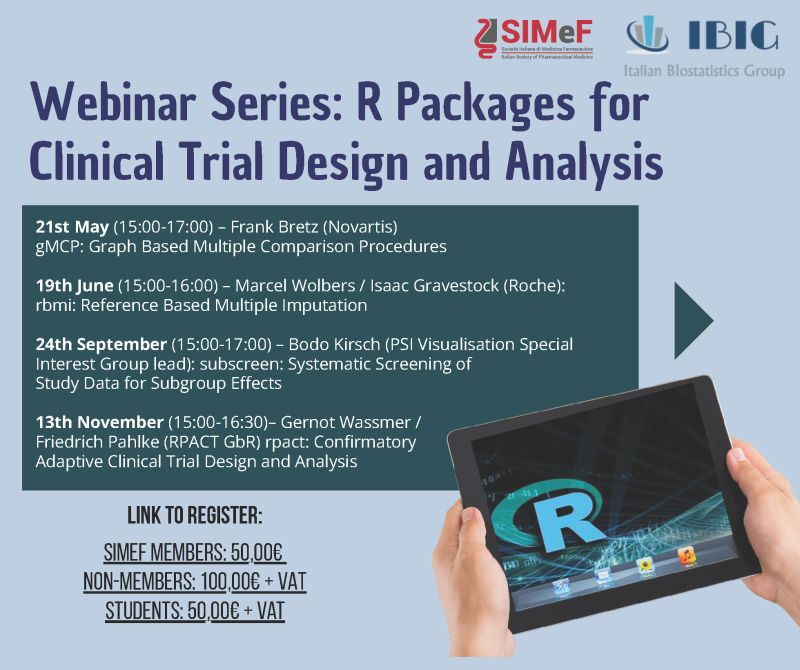
November 13, 2025, IBIG webinar series: R Packages for Clinical Trial Design and Analysis
- Talk: RPACT introduction and demo, with a practical focus
- Slides: ibig.presentation.2025.rpact.com
RPACT Activities – Trainings (cont’d)
21 new presentations/trainings/workshops, e.g.,
November 13, 2025, Kolloquium “Statistische Methoden in der empirischen Forschung”
- Talk: RPACT introduction and demo, with a practical focus
- Slides: smidef.presentation.2026.rpact.com

RPACT Activities – rpact CRAN downloads
CRAN download stats:
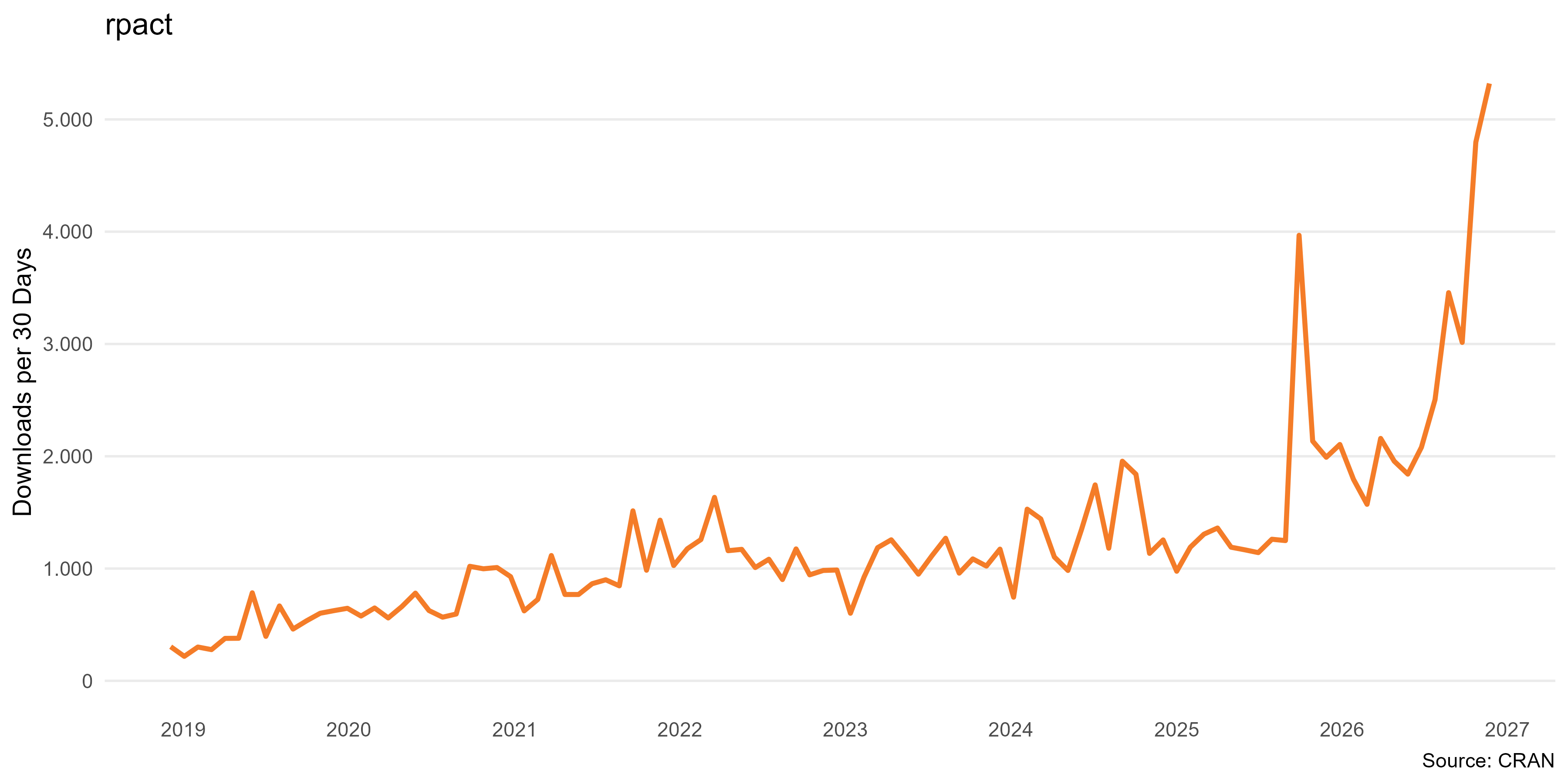
The mark of 5,000 downloads per month was broken for the first time!
RPACT Activities – Test Coverage
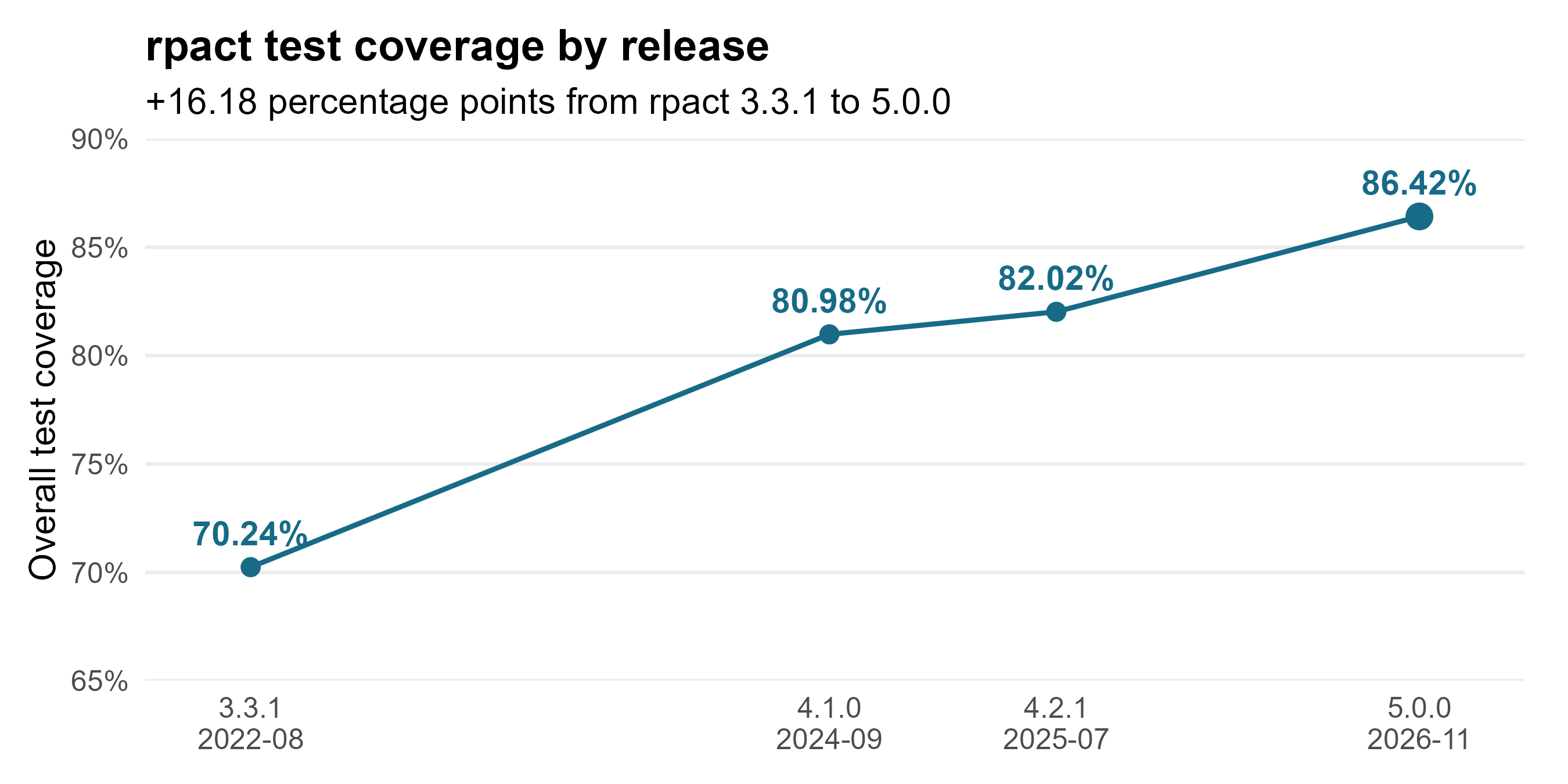
Test coverage has been extended and improved
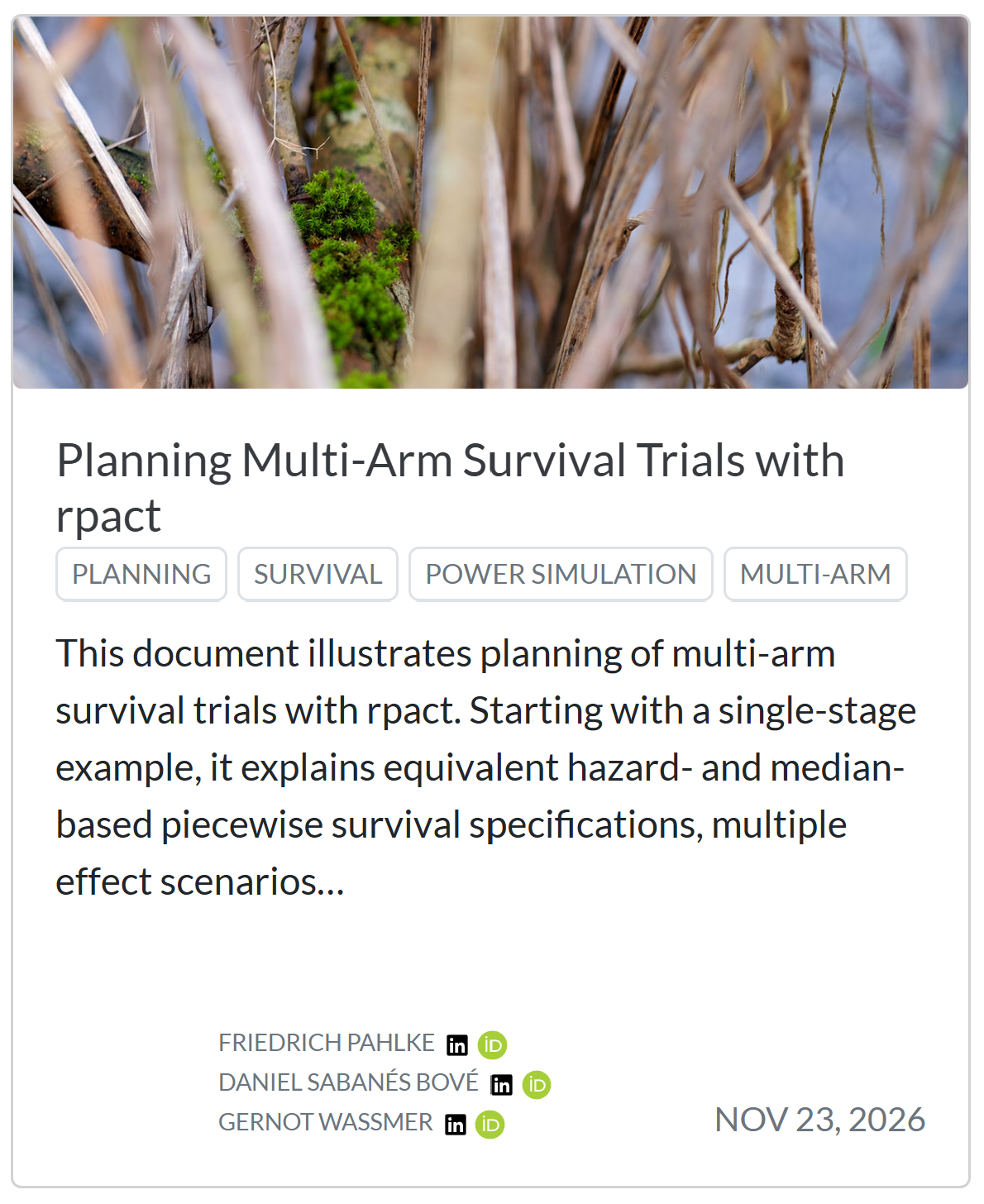
RPACT Activities – Vignettes
RPACT Activities – rpact Cheatsheet
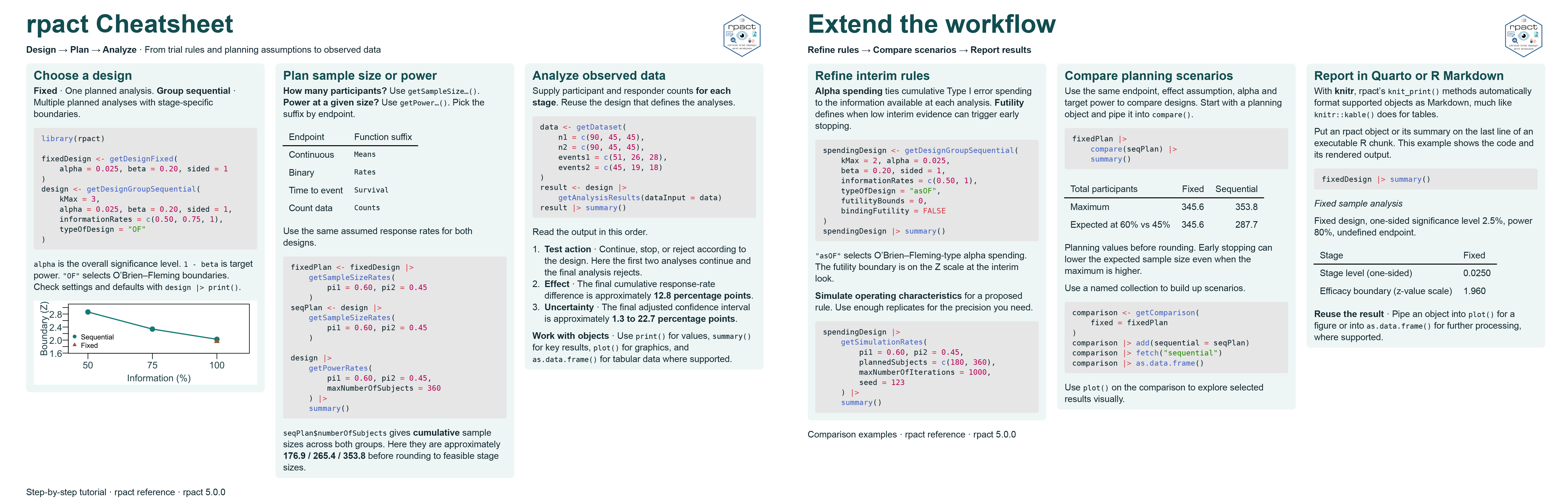
- New GitHub repository: github.com/rpact-com/cheatsheets
- PDF download: cheatsheets.rpact.org/pdf/rpact-cheatsheet.pdf
- We need your feedback to refine the first version
- A cheatsheet is a single-page, quick-reference guide that summarizes the most important functions, options, and workflows
- It is designed to help both new and experienced users quickly recall syntax and key concepts without going through full documentation
The RPACT Blog
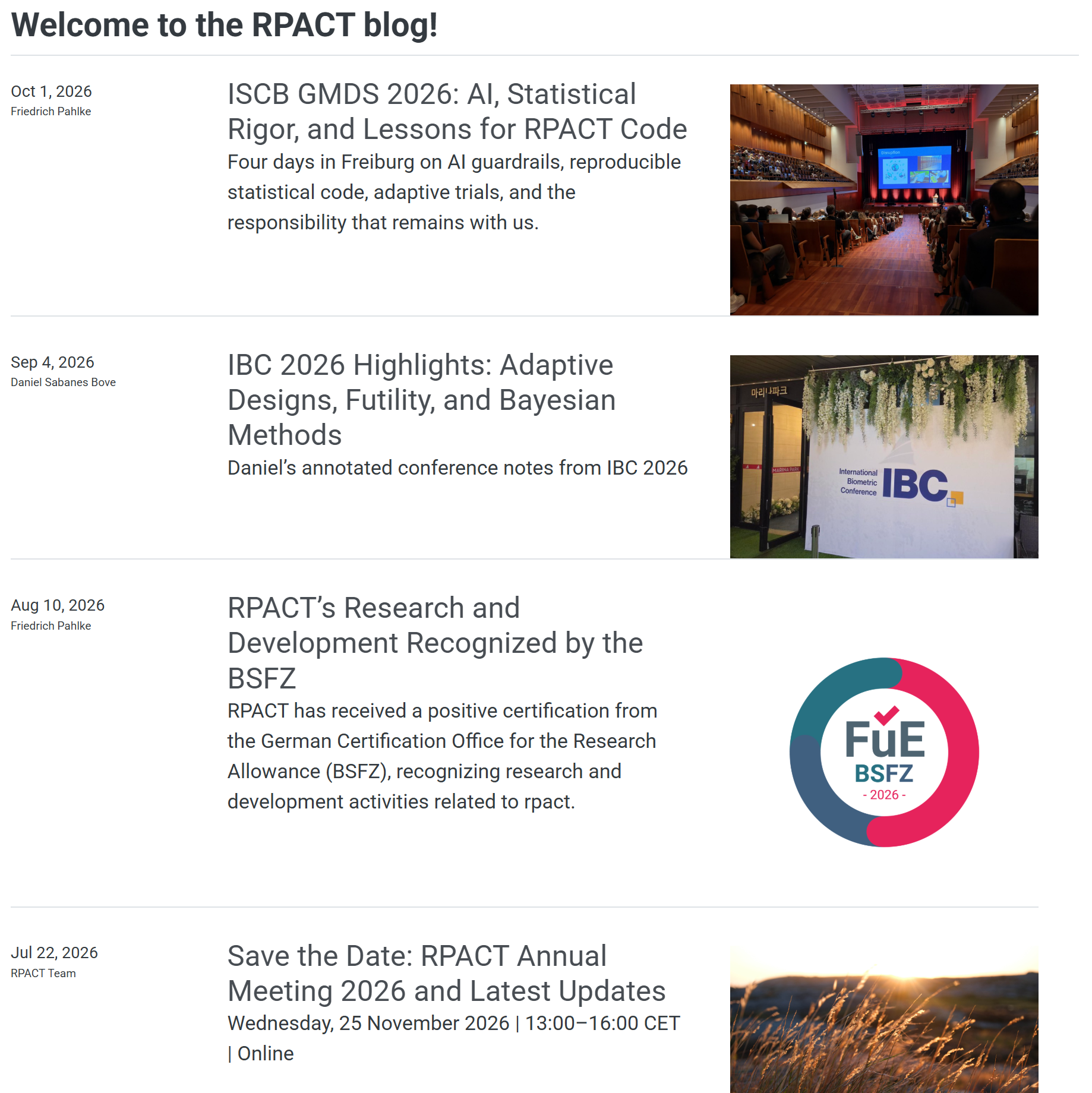
- At last year’s Annual Meeting, we had one post. We now publish regular updates on research, events, and news from the rpact community on rpact.com/blog.
- Recent topics include adaptive multi-arm trials, lessons from the Cross-Industry Forum, and the new edition of the book by Wassmer and Brannath.
Independent recognition for rpact research and development
The German Certification Office for the Research Allowance (BSFZ) confirmed that a research and development activity behind rpact qualifies under the German Research Allowance Act.
This certification is particularly meaningful to us because it follows an independent assessment of the underlying research and development activities.
Read the RPACT Blog post: rpact.com/blog/bsfz-2026
Thank you!
Questions and Answers